Global Liquidity Flows Reshaping Parlay Configurations in Overlapping Seasons
David Müller · Oct 3, 2026
Global Liquidity Flows Reshaping Parlay Configurations in Overlapping Seasons
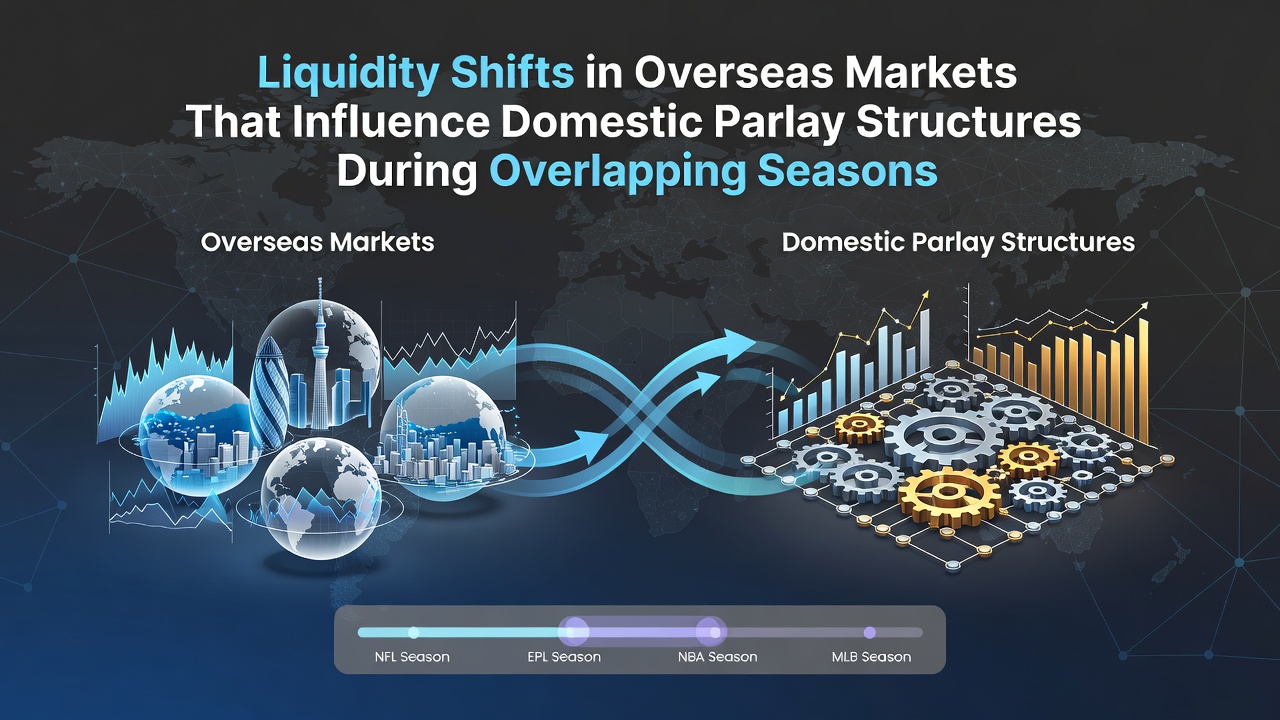
Overseas liquidity patterns have long affected how domestic operators price and structure multi-leg wagers, yet the mechanics become especially visible when several major calendars intersect at once. In October 2026, concurrent schedules across the NFL regular season, MLB postseason, and top European soccer leagues produced measurable capital movements on foreign exchanges that altered odds correlations back in domestic markets. Those shifts forced adjustments in how bettors and books assembled parlays because available liquidity in one region directly influenced the margins available in another.
Mechanics of Liquidity Transfer Across Borders
Betting exchanges in Asia and Europe often see heavy volume on soccer and tennis while American sports draw lighter interest outside peak windows, so capital flows from one set of markets can tighten or loosen pricing on correlated selections elsewhere. When liquidity pools in London or Hong Kong deepen on a given match, the implied probabilities ripple outward and change the viability of combining those outcomes with NFL or NBA legs that open later the same day. Observers note that parlay builders respond by recalibrating correlation matrices because a sudden influx of overseas money on one side of a prop can shift the entire ticket construction strategy.
Domestic platforms track these movements through real-time feeds that compare order book depth on multiple exchanges, and they adjust their own lines to avoid becoming the weakest link in an arbitrage chain. Data from the Alcohol and Gaming Commission of Ontario indicates that cross-border volume spikes during overlap periods have grown steadily since 2023, with October traditionally showing the largest variance in available liquidity on combined soccer and football selections.
Impact on Parlay Construction During Peak Overlaps
Parlay structures that once relied on high-correlation legs from a single sport now incorporate selections from multiple continents because liquidity elsewhere has compressed margins on domestic-only combinations. Bettors who previously stacked NBA player props with NFL overs found those tickets less attractive once Asian markets absorbed significant volume on the same athletes through derivative products. The result appears in altered payout tables and in the frequency with which operators allow certain cross-sport combinations inside their bet builders.

Research published by the Canadian Gaming Association shows that the average number of legs per parlay ticket declined slightly during October 2026 overlap windows, while the proportion of tickets mixing at least one overseas-derived selection rose. Those patterns emerged because deeper liquidity abroad reduced the edge on pure domestic correlations and pushed participants toward mixed-market tickets that still offered value after the foreign books had set their limits.
Seasonal Patterns and Market Responses
Every autumn brings a predictable compression of liquidity windows as North American football overlaps with soccer champions league matches and baseball playoffs. Operators respond by widening or narrowing parlay payout multipliers depending on how much overseas money has already moved the underlying lines. When European exchanges report heavier-than-normal handle on midweek soccer, domestic books often tighten the correlation bonuses they attach to same-day football props to keep overall risk balanced.
Those adjustments do not occur in isolation. A single large wager placed on a foreign exchange can alter the available odds on related props for hours afterward, forcing domestic parlay engines to refresh their suggested combinations in real time. Industry reports compiled by the European Gaming and Betting Association document similar patterns across multiple overlapping calendars, confirming that capital mobility rather than local sentiment drives many of the observed pricing changes.
Conclusion
Liquidity movements originating in overseas markets continue to dictate which parlay structures remain viable once multiple seasons run simultaneously. Domestic operators and bettors alike monitor those flows because the depth available abroad directly determines the margins and combinations that survive in home markets. As calendars grow more crowded each year, the ability to read and respond to these cross-border shifts becomes a central factor in how multi-leg wagers are assembled and priced.